Tuesday, December 18, 2012

one and only one

My previous post on Tim Allen’s first and only film as a direct, “Crazy on the Outside,” made me think of other performers who tested their hands at filmmaking – once and only once. (Televsion and cable movies, and documentaries, don't count, only theatrical narratives.) Here goes…

Johnny Depp - "The Brave" (1997)

Anne Bancroft – “Fatso” (1980)

Jack Lemmon – “Kotch” (1971)

Marlon Brando – “One-Eyed Jacks” (1961)

Morgan Freeman – “Bopha” (1993)

David Byrne – “True Stories” (1986)

Joan Rivers – “Rabbit Test” (1978)

Rip Torn – “The Telephone” (1987)

Walter Matthau – “The Gangster Story” (1960)

Talia Shire - "One Night Stand" (1995)

Richard Pryor - "Jo Jo Dancer, Your Life Is Calling" (1986)

Frank Sinatra - "None But the Brave" (1995)

Danny Glover - "Just a Dream" (2002)

James Caan – “Hide in Plain Sight” (1980)

Anthony Quinn - "The Buccaneer" (1958)

Tommy Lee Jones - "The Three Burials of Melquiades Estrada" (2005)

Charles Laughton - "Night of the Hunter" (1955)

Timothy Carey - "The World's Greatest Sin" (1962)

Raymond St. Jacques - "Book of Numbers" (1973)

Robert Culp - "Hickey and Boggs" (1972)

Angelina Jolie – “In the Land of Blood and Honey” (2011)

Dan Aykroyd - "Nothing But Troubole" (1991)

Karl Malden – “Time Limit” (1957)

Sally Field – “Beautiful” (2000)

Laurence Fishburne - "Once in the Life" (2000)

Bill Murray (co-director) - "Quick Change" (1990)

Philip Seymour Hoffman - "Jack Goes Boating" (2010)

Liev Schreiber - "Everything Is Illuminated" (2005)

Dyan Cannon - "The End of Innocence" (1990)

Robert Enders - "Stevie" (1978)

Larry Hagman - “Beware! The Blob!” (1972)

Steve Guttenberg - "P.S. Your Cat Is Deead" (2002)

Connie Stevens - "Saving Grace B. Jones" (2010)

Kevin Bacon - "Loverboy" (2005)

Edward Norton - "Keeping the Faith" (2000)

Antonia Banderas – “Crazy in Alabama” (1999). (Banderas also directed a Spanish feature never released here, “El camino de los ingleses.”)

And, of course, at the ripe age of 75, Dustin Hoffman makes his debut with "Quartet" (2013).

Did I overlook anyone?

cinema obscura: Norman Lear's "Cold Turkey" (1971)

Funny how politics never changes. Both Otto Preminger’s “Advise and Consent” (1962) and, going even further back, Frank Capra’s “Mr. Smith Goes to Washington” (1939) are as relevant today as they were when they were released. Seems to me that they were more than merely mirrors of their times. They were downright prescient.

And I can think of a few dozen more films that, although made in the past, reflect today’s disheartening political scene with an uncanny accuracy.

Case in point: Norman Lear’s slyly blistering “Cold Turkey,” which was filmed in 1968, ready for release in 1969 but held up for two years by its atypically nervous distributor, United Artists. Since it was tossed away by U.A. in 1971, “Cold Turkey” has been virtually impossible to see. It has rarely screened on television and its rather belated home-entertainment release came in more than 20 years later – in 1993. It finally surfaced on DVD in 2010, courtesy of the Warner Archive.

The hugely cynical plot is about Eagle Rock, a desperate small town in Iowa, whose entire citizenry buys into a Big Tobacco company’s challenge to quit smoking for an entire month for a tax-free check for $25,000,000 in return. Big Tobacco, meanwhile, has pretentions of winning a Nobel Prize for its humanitarian efforts. In this ripe scenario, it’s difficult to determine who is more evil – the PR hack (Bob Newhart) who is the mastermind behind this marketing scheme, or the town’s beloved (and hypocritical) young minister (Dick Van Dyke) who, with ambitions of his own, finesses and coerces everyone in town to suck it up and join up.

The film was made by Tandem Productions, a company that Lear shared in partnership with Bud Yorkin. In 1967, Tandem produced the excellent “Divorce, American Style” (also starring Van Dyke), with Yorkin directing Lear’s screen play. For “Cold Turkey,” Lear directed as well as penned the screenplay. In between, Lear and Yorkin collaborated on the iconic and groundbreaking “All in the Family” television series.

Yorkin cleverly interpolated several verité sequences in “Divorce, American Style” and Lear took that conceit a few steps further by filming “Cold Turkey” almost entirely in cinema verité. Perhaps, not coincidentally, his second-unit director was Robert Downey (“Putney Swope” and “Greaser’s Palace”) and one can sense the fascinating commingling of Lear’s political sensibility with Downey’s alt-film stylings. This was Downey’s first and only stint as a second-unit director.

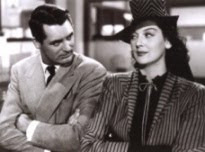
Perhaps not coincidentally, Elsie Downey (Robert’s first wife and the mother of Robert Jr.) does a wacky turn in the film as an operating-room nurse freaked out because the surgeon - Barnard Hughes - wants to smoke. (That's Downey and Hughes in the still shot above.)

Barnard Hughes is one of many notable character actors who dot "Cold Turkey" – among them, Newhart, Tom Poston, Sudie Bond, Judith Lowrey, Vincent Gardenia, Peggy Rea, Edward Everett Horton, Barbara Cason, Paul Benedict, Woodrow Parfrey, M. Emmett Welsh, Gloria LeRoy, Harvey Jason, wonderful Jean Stapleton (you know, from that aforementioned Lear-Yorkin TV series) and Graham Jarvis (from Lear's "Mary Hartman, Mary Hartman"), who is spot-on as an anti-Big Government right-wing nut. The comedy team of Bob (Elliott) and Ray (Goulding) pop up in several cameos, doing wicked impersonations of famous TV newsmen of the time.

Turner Classic Movies, ever on top of things, will screen “Cold Turkey” on Monday, January 21st - in tandem (pun intented) with “Divorce, American Style.” The double-bill will start at 8 p.m. (est) with "Divorce" which, BTW, gets an encore showing at 3:30 p.m. on Thursday, January 31st.

"Cold Turkey" is the definition of topical. It's time has come.

Monday, December 10, 2012

cinema obscura: Alan Rudolph's "Investigating Sex" (2001)


Diehard Alan Rudolph fans take note. The auteur's long-shelved "Investigating Sex," which played the film festival circuit in 2001, is finally available for us to peruse. Apparently, Rudolph had to go to Europe (Germany) to find funding for his film which is what led to its ultimate unraveling.

It is now available on DVD under the new title "Intimate Affairs." I thought you might want to know because if you came across that moniker in your local Blockbuster, you'd probably (and understandably) assume it was a Lifetime movie.

Audacious as ever, Rudolph does not let down his disciples with his examination of the free-thinking climate of bohemian Europe in the late 1920s, apparently based on real characters - from José Pierre's book, "Recherches sur la Sexualite Archives du Surealisme."

Witty in an intellectual way, "Investigateing Sex"/"Intimate Affairs" stars Dermot Mulroney as Edgar who oversees a circle of avant-garde pals in discussions of modern sexuality - which Edgar insists be dealt with in clinical detail.

The participants include Jeremy Davies as a filmmaker, Alan Cumming and Til Schweiger as two artists and Julie Delpy as Edgar's lover who prefers flesh-and-blood sex to abstract discussions of the subject.

Brought into the circle are two young stenographers - the sexually experienced Zoe (Robin Tunney) and the virginal Alice (Neve Campbell), with the understanding that they don't comment on what they hear and record. Rounding out the cast are Nick Nolte as a businessman and Tuesday Weld as his wife, whose villa Edgar uses for the discussions.

Reviewing from the 2001 Seattle Film Festival, Variety's Ken Eisner wrote,"whether set in 1929 or 2001, 'Investigating Sex' already feels too dated, and far too timid, to spark any real exploration of mind or body."

Monday, December 03, 2012

cinema obscura: Tim Allen's "Crazy on the Outside" (2010)

I find that when an actor decides to try directing, his/her first feature usually reflects something of the new filmmaker’s personality.

Case in point: Clint Eastwood’s “Play ‘Misty’ for Me” (1971). Another: Paul Newman’s “Rachel, Rachel” (1968). What follows may vary, but the debut film generally mirrors its director’s persona. So it came as little surprise that Tim Allen’s sadly underseen directorial debut, “Crazy on the Outside” (2010), has a distinctive low-keyed quality, not unlike Allen himself. It is self-effacing and soft-spoken, qualities at odds with a time when “funny” is synonymous with anything that's loud, profane and generally rude.

“Crazy on the Outside,” on the other hand, is a throwback to the gentle B screen comedies of the 1940s and early ‘50s, the kind that might have starred Joel McCrea or Dennis O’Keefe. In it, Allen plays Tommy, a good soul who’s spent the last few years behind bars, after having taken the rap for an unsavory – and clearly criminal – friend, Gray. Recently released, Tommy gets a transitional job at a fast-food restaurant through his parole officer – a single mom named Angela – while his sister Vicki nudges Tommy towards taking over their late father’s painting business.

On the sidelines is Tommy’s old girlfriend Christy who has delusions of dallying with Tommy even though she’s engaged to a businessman who stars in his own TV commercials. Under Allen’s direction, the unrushed film just moseys along. What really distinguishes it is the impressive cast that Tim Allen has assembled and his easy-going direction of his actors.

He recruited two former costars – Sigourney Weaver (excellent as Vicki), who appeared with Allen in “Galaxy Quest” (1999) and the wonderful Julie Bowen (as Christy), his leading lady from “Joe Somebody” (2001). Rounding out the cast: Ray Liotta as the incorrigible Gray, J.K. Simmons as Weaver’s husband, Kelsey Grammer as Bowen’s blowhard fiancé and Jeanne Triplehorn as the calmly Angela. She matches up well with Allen.

The two make very good company. Everyone here does.

Saturday, November 24, 2012

doppelgängers/ Ben's erratum

"Sing Out, Louise, sing out!"
Once again, the astute programmers for Turner Classic Movies offered up back-to-back screenings of Walter Lang's delirious and deliriously campy "There's No Business Like Show Business" (1954) and Mervyn LeRoy's bravura filmization of "Gypsy" (1962). This clever double-bill aired today beginning at 3:15 p.m. (est) and was also showcased in tandem on Turner last January 25th (oddly, also starting at 3:15 that day).

Ethel Merman is the obvious connection here, given that she heads the ensemble of the Lang film and was in the original 1959 stage production of "Gypsy." Even more obvious are the thematic similarities that the two productions share. Merman plays a vaudeville-era stage mother in both (as well as a performer herself in "Show Business") and even though "Gypsy" came from a distinctly different source, namely Gypsy Rose Lee's autobiography, you have to think that its makers got some inspiration and ideas - and perhaps even the decision to write "Gypsy" with Merman in mind - from "There's No Business Like Show Business."

If Turner elects to pair them up again (and there's no reason to think it won't), by all means, tune in and compare and contrast.

BTW, in his post-screening discussion of "Gypsy" today, the very affable Ben Mankeiwicz, reading from a script, passed on some dated misinformation, stating that Merman's chances of recreating her stage role in "Gypsy" were shattered when producer Frederick Brisson, husband of Rosalind Russell, bought the film rights to the musical and took the project to Warner Bros. with the stipulation that Russell star in the role Merman originated - Madam Rose. (The character, incidentally, is never referred to as Mama Rose in either the stage show or film, as most people assume.)

Not true.

Brisson and Russell were actually negotiating with Harper Books for the rights to the Gypsy Rose Lee autobiography with the idea of producing a straight dramatic version of the material, a plan that was misinterpreted - perhaps intentionally - in the gossip columns at the time. It was erroneously reported that Brisson and Russell were planning to film the musical "Gypsy" and drop all the songs, making both the star and her husband persona non grata among rancorous theater types. It was Jack Warner himself who personally optioned the film rights to "Gypsy." He also purchased "The Music Man" at the same time. In fact, the Warner Bros. studio issued a single press release announcing its plans to film both musicals. with a target release for each of them in 1962.

Brisson, in the end, was never able to option the Gypsy Rose Lee book because its rights were irrevocably tied up in the musical stage production.

Knowing Russell's interest in the material and having had a good working relationship with her on Morton DaCosta's "Auntie Mame" (1958) and LeRoy's "A Majority of One" (1961), it was only natural that Warner would offer the role of Madam Rose to Russell. Judy Garland vied for the role but only with her daughter Liza Minnelli attached to play Gypsy, and Doris Day, once a Warner contract player, reportedly was also interested, but Russell was Warner's one and only choice. (For better or worse, Merman herself was never considered because she had been absent from the screen too long and consequently had little-to-no box-office appeal.)

Now, the stage play that Brisson did option for Russell was Peter Shaffer's "Five Finger Exercise," released in 1962 (the same year as "Gypsy") and on which he has producer credit. (He has no credit on "Gypsy.")

As noted, the nasty fiction that Russell was angling to buy "Gypsy" and drop the songs hurt her in the theater community, and exacerbating this was the perception that she also "stole" prime stage roles from their originators - Gertrude Berg ("A Majority of One"), Jessica Tandy ("Five Finger Exercise") and , of course, Merman ("Gypsy").

And, unbelievably, the grudge persists 50 years later. Still, Russell's definitive take on Madame Rose - the patrician airs she brings to the role - dominates the film of "Gypsy." Her line-readings are impeccable, and her timing, particularly her comic timing, is peerless. A world-class actress.

All the other Roses pale in comparison.

Note in Passing: Another project about Gypsy Rose Lee was also once in the works. It was announced a few years ago - by HBO, I believe - that there would be a film of Erik Lee Preminger's book about his mother, "Gypsy & Me: At Home and on the Road with Gypsy Rose Lee" (1984), with Sigourney Weaver as Gypsy.

The film never materialized. As of yet.