Wednesday, August 29, 2007

"No Sex Please, We're ... American"


When I was gainfully employed as a professional movie critic, I would invariably receive a phone call for an adult identified as a parent asking about the content of a certain movie.

Also invariably, that parent would be concerned about only the sexual content of the film, especially nudity and, to a lesser degree and by extension, language.


Whenever I would ask if they were concerned about violence, they weren't.

In short, no sex please, we're American.

Historically, this attitude makes perfect sense if you think about it.

This country, after all, was founded by, to put it bluntly, a bunch of violent puritans - seriously sexually repressed people who had no problem picking up a gun and blowing the head off someone.

This attitude was imprinted on our country more than two hundred years ago and it still prevails.

Perhaps this explains why the parents who sit on the board of the Motion Picture Association of America, like most Americans, are more uptight about nudity and simulated sex in movies than they are about grotesque, wholesale violence.

It also explains why, politically-speaking, this country gets more upset by a sexual indiscretion than with war.

It's sick, yes, but it's what makes America ... America.

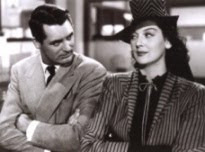
(Artwork: Charles Bronson, oui. Bridget Bardot, non!)

* * *

Anyone interested in perusing some 2060 of my film reviews, dating back to 1994, can do so by simply going to RottenTomatoes.Com

Sunday, August 26, 2007

cinema obscura - Four Filmed Plays, All Lost

Four plays. Four movies based on them. There was a time when the studios relied on the Broadway theater to supply it with its prestige productions - films not meant to make money but to win awards and to impress. You know, win Oscars. But these four are largely forgotten now.

When you're a prestige film and fail to win awards, you generally fall through the cracks, fated for oblivion.

Today, let's pretend we're in New York during the late 1950s and early '60s - the theater district's golden era - seeing something at the Belasco or Music Box theater.

George Roy Hill's "Toys in the Attic" (1963)

Lillian Hellman's play about two spinster sisters who have been supporting their loser brother through several failed business ventures opened February 25th, 1960 at the Hudson Theatre and ran for 456 performances. Maureen Stapleton and Irene Worth played the sisters; Jason Robards was their brother, and Rochelle Oliver played his young wife. Arthur Penn directed.

The 1963 film version starred Geraldine Page and Wendy Hiller as sisters Carrie and Anna Berniers, respectively; Dean Martin as their brother Julian, and Yvette Mimieux as his bride. The great Gene Tierney played the role that won Anne Revere as Tony for the stage version.

James Poe adapted the Hellman play for director George Roy Hill, directing his second film here, following his 1962 debut with the adapation of another play -"Period of Adjustment," the Tennessee Williams comedy he directed on Broadway. Hill's next film was 1964's delightful "The World of Henry Orient" (which Hill would eventually direct as a stage musical, "Henry, Sweet, Henry") and, of course, he became a major player with 1969's "Butch Cassidy and the Sundance Kid."

The movie itself is a talky to-do - but what talk! - about an unusually dysfunctional and repressed family unraveling. In short, a wonderful afternoon at the theater.

Alex Segal's "All the Way Home" (1963)

This piece has something of a legendary history. Based on James Agee's Pulitzer Prize-winning novel, "A Death in the Family," it was first adapted by Tad Mosel for the stage in 1960. It opened at the Belasco Theater on November 30th of that year, with a cast headed by Arthur Hill, Colleen Dewhurt and - now get this - Lillian Gish and Aline MacMahon. Actor's heaven. Again, Arthur Penn directed.

Set in Tennessee in the early 1900's, "All the Way Home" revolves around a man's sudden, accidental death and the ramifications that it has on his family, especially his young son. The play examines the process of mourning and the heartache that makes it almost impossible to heal.

The 1963 film version, directed by Alex Segal, starred Robert Preston as the father, Jean Simmons as his wife, Pat Hingle as his brother and, recreating her Broadway role, the great MacMahon as Aunt Hannah. Michael Kearney played the boy, a role played on Broadway by John Megna, a child actor best known for his role as Dill in the film, "To Kill a Mockingbird." Philip H. Reisman Jr. did the adaptation for this most affecting film.

"All the Way Home" was also filmed twice for televison - first in 1971 with Fred Coe direcing Richard Kiley, Joanne Woodward and (again) Hingle in a teleplay adaptation by Mosel. The second TV version, shot in 1981 by Delbert Mann, starred William Hurt, Sally Field and Ned Beatty. Polly Holliday played Aunt Hannah.

Delbert Mann's "The Dark at the Top of the Stairs" (1960)

There are those who thought that the great playwright William Inge would enjoy the household-name status of Tennessee Williams, given that in the 1950s he wrote such plays as "Come Back, Little Sheba," "Picnic," "Bus Stop" and, in 1957, "The Dark at the Top of the Stairs," all of which were adapted into films. His 1959 play, "A Loss of Roses," became the 1963 film, "The Stripper" and he also wrote the screenplay for Elia Kazan's "Splendor in the Grass" (1961), in which Inge played the small role of of a minister who counsels Natalie Wood.

Kazan also directed the Broadway version of "The Dark at the Top of the Stairs," which opend at the Music Box Theatre on December 5, 1957, with a cast including of Eileen Heckart, Pat Hingle and Teresa Wright. Once again, we have another dysfunctional family drama about a man who, in middle age and out of work, tries to compensate for a lack of self esteem by cheating on his wife with another woman in another town.

The 1960 film, directed by Delbert Mann (again) from Harriet Frank, Jr.'s adapation, starred Robert Preston (again) in the Pat Hingle role, along with Dorothy McGuire, Eve Arden, Angela Lansbury and a young Shirley Knight, an Oscar nominee. Preston, great as always, did this between his stage and film appearances in "The Music Man." He had a great second act, thanks to the success of the musical, giving memorable turns in such titles as "Junior Bonner," "Child's Play," the aforementioned "All the Way Home," "Semi-Tough" and "Mame."

Delbert Mann's "Middle of the Night" (1959)


Paddy Chayefsky's tender play about a young woman looking for a father figure, opened on Broadway on February 8th, 1956 and starred Edward G. Robinson (who won a Tony Award for his performance) and a young actress named Gena Rowlands. It was adapted from a teleplay that Chayefsky wrote for NBC's Philco Television Playhouse that was performed on September 19th, 1954. E.G. Marshall and Eva Marie Saint starred for director Delbert Mann (yes, again) in the TV version.

When Columbia purchased the film rights in 1959, Chayefsky was part of the package, writing the adaptation of his play and, to his credit, he did not tone down the Jewishness of the male lead character to accomodate either Fredric March who played the part or the audience of the day.

The ubiquitous Mann once again directed, eliciting unusually subtle performances from both March and Kim Novak as a widower businessman and the much younger secretary with whom he falls in love, deciding against everyone's wishes to marry her.

"Middle of the Night," voted One of the Year's Ten Best Films by the 1959 National Board of Review, has never been released on home entertainment.

Cinema Obscura is a recurring feature of The Passionate Moviegoer, devoted to those films that have been largely forgotten. Suggestions welcome.

(Artwork: From top. Wendy Hiller, Dean Martin and Geraldine Page in "Toys in the Attic"; Robert Preston and Jean Simmons in "All the Way Home," and poster art for both "The Dark at the Top of the Stairs" and "Middle of the Night")

* * *

Anyone interested in perusing some 2060 of my film reviews, dating back to 1994, can do so by simply going to RottenTomatoes.Com

Friday, August 24, 2007

cinema obscura: Sundance Discovery! "Polly Maggoo" Airs! Plus More!

The Sundance Channel continues to air Universal titles that Universal apparently doesn't care about. Alan Alda's "The Four Seasons" was one of the recent survivors, for example.

Anyway, check on George Roy Hill's masterwork, "Slaughterhouse-Five" (1972), faithfully based on the Kurt Vonnegut book, at 7 p.m. (est) pm Friday, August 31st.

George Miller's "Lorenzo's Oil" (1992), an intelligent sick-child film featuring affecting performances by Nick Nolte and Susan Sarandon, airs at 8 a.m. (est) Saturday, September 1st, followed by Allan Winton King's 1981 Canadian film, "Silence of the North", starring Ellen Burstyn, at 12:30 p.m.(est).

The film verison of the stylized Luis Valdez Broadway musical "Zoot Suite" (1981) , starring Edward James Olmos, Tyne Daly and most of the Broadway cast, pops up at 2 p.m. (est) on Thursday, September 6th. It's difficult to believe that Universal even made this film.

But the big news is the dual debut of two long-lost French titles - Jean
-Luc Godard's 1972 "Tout Va Bien" ("All Is Good") and expatriate American filmmaker William Klein's 1966 "Que êtes-vous, Polly Maggoo?" ("Who Are You, Polly Magoo?").

"Tout Va Bien," airing on Thursday, August 30th at 11:15 a.m. and 6:15 p.m. (est), was something of an art-house and festival event in '72, pairing the still-militant and social-conscious Jane Fonda with French workhorse Yves Montand in a talky, pretentious, ultimately disappointing polemic about a workers' strike at a slaughterhouse in Paris.

Fonda and Montand play a married couple - she's a reporter, he directs commerials - who find themselves trapped in the meat factory where a lot of preachy soul-searching about class takes place. You stay with it because it's Godard, Fonda and Montand, but "Tout Va Bien" (released on DVD by Criterion in 2005) is decidedly minor. There's a reason why it's been largely forgotten.

"Polly Magoo," meanwhile, directed by former fashion photographer William Klein and featuring a score by Michel Legrand, is a lively curio about the Swinging Sixties, French-style, and the fashion industry.

Airing Saturday, September 1st at 8 p.m. (est), it is colorful, fun and almost depressingly date but definitely worth the watch, especially for the late, great Grayson Hall who plays the editor of Voguehere and is allegedly doing a wicked variation on Diana Vreeland (Klein's old boss), seemingly by way of Kay Thompson (shades of "Funny Face" here).

Co-starring French stalwarts Jean Rochefort, Sami Frey and Philippe Noiret. The unknown, untrained Dorothy MacGowan plays the titual Polly. She's fab, but it was her first and last film.

The film all but evaporated until it showed up for two screenings at the Whitney Museum of Art in 1997. This is its first America broadcast.

Note in Passing: As a filmmaker, Klein is perhaps best remembered for his stirring 1969 Muhammad Ali documentary, "Fly Like a Butterfly, Sting Like a Bee."

(Artwork: Dorothy MacGowan as Polly Maggoo/Polly Magoo, and friends, in William Klein's seemingly lost French novelty)

* * *

Anyone interested in perusing some 2060 of my film reviews, dating back to 1994, can do so by simply going to RottenTomatoes.Com

Shari Springer Berman and Robert Pulcini's "The Nanny Diaries"


"The Nanny Diaries." The critics rave:

"The Funniest Film of the Year!"
-Jack Egan, BTL News

"The Freshest, Funniest, Most Purely Enjoyable Movie of the Season!"
-Milan Paurich, ABC-TV

"The Intelligent Comedy You've Been Waiting For!"Roger Friedman, foxnews.com

Huh? It's supposed to be a comedy?

On the other hand, in his review in The New York Times, Stephen Holden says, "The storytelling is rushed and sloppy." Of the film's star, Scarlette Johansson, Holden comments, rather astutely, "Ms. Johansson’s Annie, who narrates the movie in a glum, plodding voice, is a leaden screen presence, devoid of charm and humor. With her heavy-lidded eyes and plump lips, Ms. Johansson may smolder invitingly in certain roles, but 'The Nanny Diaries' is the latest in a string of films that suggest that this somnolent actress confuses sullen attitudinizing with acting."

Meanwhile, over at The Philadelphia Inquirer, Steven Rea wastes no time getting to the heart of the matter. "It's really a painful reminder of everything the film adaptation of 'The Devil Wears Prada' is, and 'The Nanny Diaries' is not."

Rea's headline writer is even more succinct:

"For 'Nanny Diaries,' the word is 'dull'"

How's that for a money quote?

(Artwork: Scarlett Johansson and Nicholas Reese Art in "The Nanny Diaries," and critics Stephen Holden of The New York Times and Steven Rea of The Philadelphia Inquirer.)

* * *

Anyone interested in perusing some 2060 of my film reviews, dating back to 1994, can do so by simply going to RottenTomatoes.Com

Jack Warner, Please Come Home!


Where are Jack Warner, Harry Cohn and Louis B. Mayer when you need them? It seems the Hollywood culture, if you can call it that, has gone to rot since the demise of the bad old studio system, a time when the imposing movie moguls treated their companies as one giant rigid patriarchy. They were unforgiving father figures who ruled with iron fists and made sure that their charges were always in line.

A Linsday Lohan would have been taken under wing, groomed for stardom with hand-picked roles and taught public etiquette, especially whenever in the vicinity of the press.

Mouthing off would have been out of the question. Which brings us to Jamie Foxx. If you had the interest - or the stomach for it - you might have tuned in "Access Hollywood" last night to watch as Foxx impulsively defended the ugly dog-fighting extra-curricular activities of Atlanta Falcons quarterback Michael Vick, who recently pleaded guilty to the charges.

It was not a pretty sight - Foxx's defense of the indefensible, not the dog-fighting charges.

Glib and self-consciously cool as ever, Foxx took time out from “The Foxxhole,” his weekly show on Sirius Satellite Radio show, to talk to "Access Hollywood’s" Shaun Robinson about the situation.

“It’s a cultural thing, I think,” Foxx said. “Most brothers didn’t know that, you know. I used to see dogs fighting in the neighborhood all the time. I didn’t know that was Fed time. So, Mike probably just didn’t read his handbook on what not to do as a black star.”

Ah, just one superstar to another.

I love how Foxx mangles the word "cultural" in his rationale.

What Foxx doesn't understand is that dog-fighting is just the tip of the iceberg. What precedes it is even more loathsome.

Female dogs are literally bred to death, birthing puppies, which come into this world foolishly wanting only to be cared for. They are brutalized instead. They are strapped to treadmills for hours walking and running. They are starved and taught to despise their own species. When they don't preform, they are beaten. When they fail, they are "executed" - hung or drowned.

I can't understand how anyone can do this, but how any African-American man can participate in such activies is even more jaw-dropping, given that his ancestors probably experienced the exact same inhuman treatment. I hope this isn’t taken as a facile anology, as it certainly isn't meant to offend. Nevertheless, I find the irony of this case both sad and disturbing.

Vick certainly isn't strapped for cash. His alleged actions have much more to do with an irrational need to be cruel than it does with naked greed.

So much for the notion of man’s best friend, right? End of diatribe.

That said, Jack Warner, please come home! Hollywood needs you. Badly.

(Artwork: Jack Warner, right, with Max Reinhardt and Hal Wallis; Jamie Foxx; and Foxx with Michael Vick inset on "Access Hollywood")

* * *

Anyone interested in perusing some 2060 of my film reviews, dating back to 1994, can do so by simply going to RottenTomatoes.Com