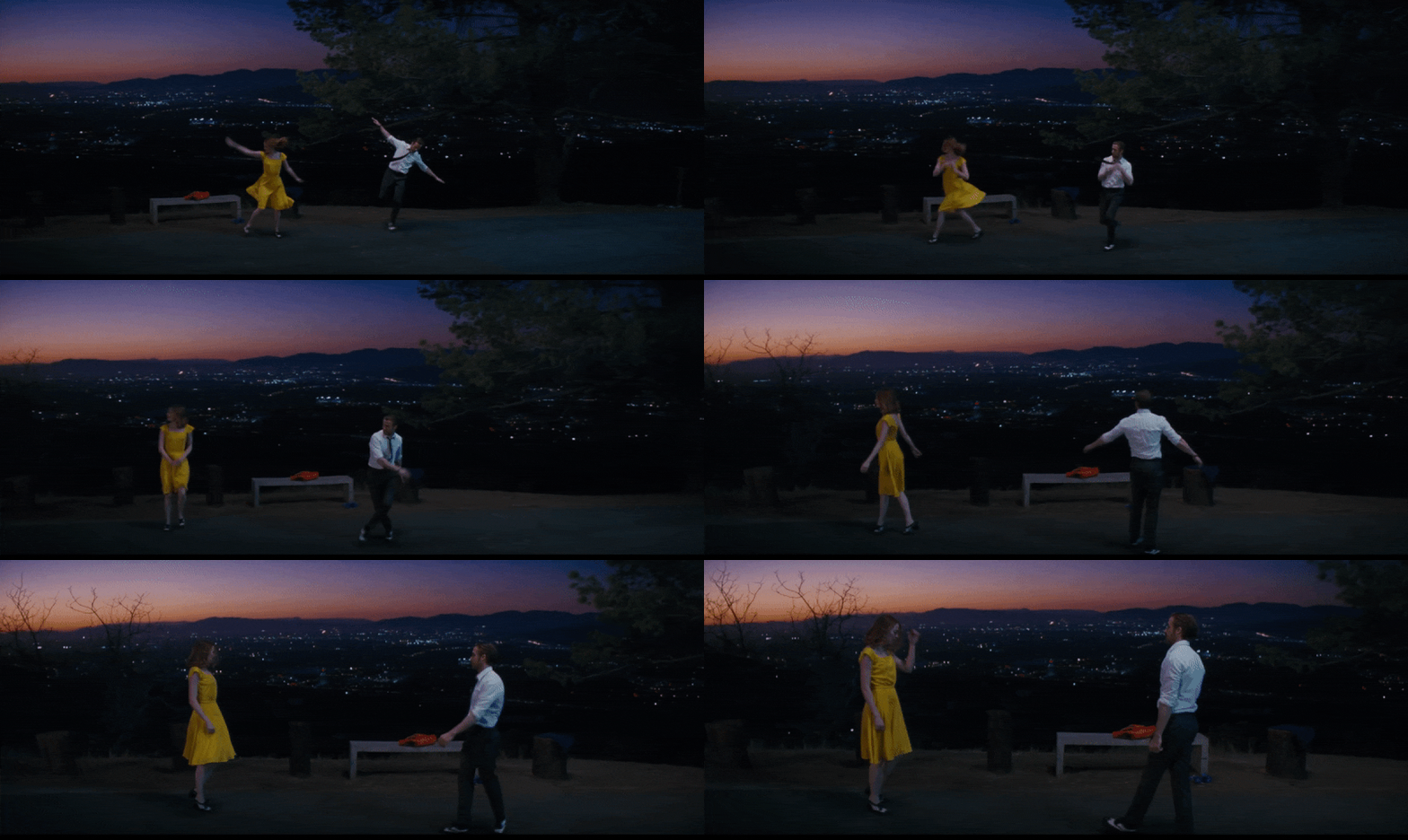
Thursday, November 09, 2017

double take

 ~Peter Lawford and June Allyson dancing in Charles Walters' "Good News"
  ~Location/Time: Campus of Tait College (aka, an MGM backlot) / around noon
~Choreography: Robert Alton 
~Metro-Goldwyn-Mayer 1947©

~Emma Stone and Ryan Gosling dancing in Damien Chazelle's "La La Land" 
~Location/Time: The Hollywood Hills / around midnight
~Choreography: Mandy Moore
~Lionsgate/Summit Entertainment 2016 ©

* * * * * * * * * *
 

Sunday, November 05, 2017

cinema obscura: two with june allyson

When the eternally youthful, all-American June Allyson died at age 89 on July 8, 2006, most of the coverage was devoted to her team-spirited work at MGM and the various “wife” roles that she played in a string of biopics.

Missing from the career appreciations were two atypical Allyson titles - José Ferrer's compelling "The Shrike" (1955) and Douglas Sirk's lovelorn "Interlude" (1957), both made and released by Universal-International.

The two are impossible to see (or even find) these days, although Turner Classic Movies had "Interlude" penciled in for a couple screenings in the recent past, only to subsequently substitute another title at the 11th hour.

The disappearance of “The Shrike” is particularly odd, given its lofty credentials. Based on the Pulitzer Prize-winning 1952 play by Joseph Kramm, the stage production won two Tony awards for José Ferrer – as "best actor in a play" and "best director of a play." On stage, Ferrer co-starred with Judith Evelyn, best known as the timid Miss Lonelyhearts, spied on by James Stewart in Alfred Hitchcock’s “Rear Window” (1954).

However, when Ferrer decided to transfer the play to film, his first as a director and with himself again in the male lead, he did the unforeseeable and hired Allyson to play the role of a bright, seemingly caring wife (seemingly) who relentlessly pecks and pecks away at her husband – much like the bird of the title – until she has effectively reduced him to a state of utter helplessness and frightening mental instability.

Never before had Allyson's sunniness been made to seem so untrustworthy - it's toxic actually - and she responds to the challenge with a memorably unsettling (and yet subtle) performance. With this film, Ferrer explored what the critic Richard Schickel described as Allyson’s “vaunted sweetness,” as well as the perilous state of marriage when one of its partners fairly drips -  and seduces - with venom. “It was a delicious combination,” Schickel commented in his book “The Stars” (1962) – "her surface sweetness and the inner viciousness of the role.” A great performance.

James M. Cain concocted the story for Douglas Sirk's "Interlude," which was remade a decade later in 1968 under the same title by director Kevin Billington - although, for some bizzar reason, Cain goes uncredited in the Billington version. Oddly, Cain only supplied the story to Sirk. He didn't pen the screenplay. That was done by a collection of other writers.

Both films are European-based soap operas about a young, impressionable woman (Allyson in the Sirk version, Barbara Ferris in Billington's) who falls for a married orchestra conductor (Rossano Brazzi and Oskar Werner, respectively). The heroines both suffer in achingly beautiful surroundings, although neither film is exactly an emotional knockout. And the remake is as difficult to see as the original.

Allyson playing a woman who falls for a married man and pursues an affair with him could have meant career suicide in the 1950s, especially for someone who played uncomplicated, perky woman in which Allyson specialized. But her performance here is another gentle reminder that it was foolish for one  to underestimate June Allyson.

It's interesting to compare the two versions of the material. The Sirk film, of course, has those matchless Sirkian qualities that he so freely exhibited at Universal-International during this ripe, productive period, while Billington's take on it is more realistic and kept afloat largely by the mesmerizing, mournful Werner and the lovely Virginia Maskell as his wife.

 The choice of music is also interesting. The remake has a classic Georges Delerue score. Lots of harpischords here - way over the top. Frank Skinner scored Sirk's film in a more traditional, studio-approved way.

Sirk opens his film with a song by the McGuire Sisters; Billington and Delerue use the inimitable Timi Yuro for the remake's haunting title song.

You know, I'd actually like to see "Interlude" again - both versions.

And certainly "The Shrike," which is begging for a remake of its own.
* * * * *
~images~
(from top)

~Vintage June Allyson
~photography: MGM 1947©

~Poster art for "The Shrike"

~Publicity shots of June Allyson and José Ferrer in "The Shrike"
 ~photography: Universal-International 1955©

 ~Poster art for "Interlude"

~Allyson and Rossano Brazzi in "Interlude"
~photography:  Universal-International 1957© 

Wednesday, November 01, 2017

the american dream, unraveling

Nothing can undermine a good film quicker than preconceived notions or baseless expectations. And George Clooney's exceptional "Suburbicon" has been confronted by both, misunderstood by the moviegoing public (which has officially devolved into a state of permanent adolescence) and critics (who, one would think, should know better but generally don't).

I'd rather not know what might exist in the minds of the franchise-happy movie patrons who keep the Hollywood studios alive, well and obscenely profitable these days and I guess that I shouldn't expect much from contemporary critics either, but it baffles me when a film is casually dismissed simply because it's not what people expected or wanted it to be.

Prior to its release, the impression was that "Suburbicon" would be a fictionalized account, by way of the Coen Brothers, of the disappointing, shameful behavior of white people when a black family moved into Levittown, Pa. in 1957. It wasn't exactly America's greatest moment.

 The expectation was the film would actually be about a black family. But, wait! The Coens are noted for approaching their narratives circuitously and adding clever, inappropriate curlicues for entertainment value. And that's exactly the approach that Clooney and his co-writer Grant Heslov took and honored when they dusted off and filmed the Coens' script. It would be really rather foolhardy to expect the Coen-sourced "Suburbicon" to be a serious, cautionary tale about race relations.

The film is less about the plight of the tormented black family who moves into a blindingly white suburban community in the 1950s, than about the general awfulness of white people who have not changed since the '50s. Clooney is nothing if not brave to make a film in which, except for its little pre-teen hero, is devoid of a single Caucasian who is decent or likable.

The black family in "Suburbicon" - The Mayers - remain on the periphery throughout the film, a plot point that has outraged some critics. They are there simply to be bystanders to the shameful behavior of the white families who surround them and resent them. And especially problematic for reviewers is the fact that the film's leading white family - The Lodges - has barely noticed or is even aware that a black family has moved in.

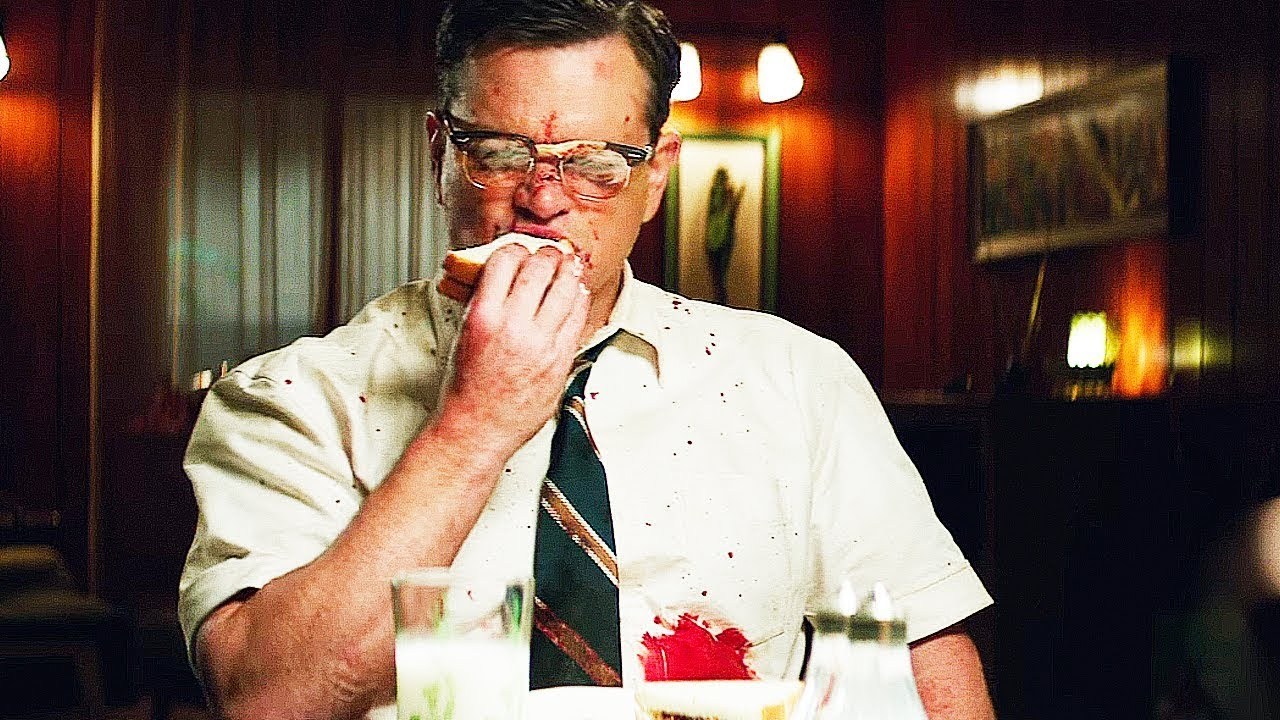
Matt Damon plays the patriarch, Gardner Lodge, and in a more mundane, straightforward movie, Gardner would intervene on behalf of The Mayerses. But "Suburbicon" is a gleefully bent film: Gardner is too caught up in his own dubious doings to care about his new neighbors and their threatened civil rights.

In a daring style of storytelling, Clooney makes no effort to connect the two storylines, keeping The Lodges apart from the Mayers family. Only their children - Tony Espinosa as Andy Mayers and the remarkable Noah Jupe as Nicky Lodge - have any meaningful, humane contact in the film.

Clooney handily guides his film through a collection of amusing Hitchcockian twists and turns, many jaw-droppingly inappropriate and unapologetic, and locates humor (of the jet-black variety) that the politically correct might find insensitive and probably just plain gross.

Insensitive?  Gross? For me, it's simply some much-needed sarcasm.

Jupe is placed regularly in unsettling situations - very incorrect - but the young actor is almost preternaturally game in a performance that defines the fractured message of the film. Damon, always flawless, bravely abandons himself in a role and performance unlikely to win him any awards but should. And Julianne Moore is simply a hoot as twin sisters.

As far as her role(s) in the film, I'll leave it at that.


There are invaluable contributions here by cinematographer Robert Elswit, editor Stephen Mirrione, costume designer Jenny Eagan, production designer James D. Bissell, set decorator Jan Pascale and particularly Alexandre Desplat, who has composed a diverse, wall-to-wall music score that, artfully and surprisingly, never seems the least bit intrusive.

From where I sit, Paramount has had a banner year with radical cinema, as evidence by Darren Aronofsky's "mother!" and now "Suburbicon," brash films branded as "audience unfriendly" (for me, not entirely a bad thing). And, much like "mother!," Clooney's film goes through something akin to a hysterical nervous breakdown as it speeds towards its conclusion. Coming up from Paramount is Alenxander Payne's "Downsizing" (also with Damon) and, despite the cheery trailer, I'm hopeful that it also has a dark side.

And that it's similarly inappropriate (there's that word again) and sarcastic - "qualities" that we desperately need more than ever now.
* * * * *
~image~
 from top

~One of the posters for Paramount's "Suburbicon"

~ Matt Damon and Noah Jupe in a scene from the film
~ Damon having dinner after a particularly rough day
~Julianne Moore, Jape (back to camera), Damon and Jack Conley looking for "bad guys"
 ~photography: Paramount 2017©

Monday, October 30, 2017

what if?

Happy anniversary, America!

Seventy-nine years ago today - yes, 79 years - the incorrigible Orson Welles broadcast the infamous "The War of the Worlds" episode of his popular radio program, Mercury Theater on the Air. It was October 30th, 1938 and it was a Halloween episode aired by the CBS radio network.

Directed and narrated by the then-23-year-old Welles, who had yet to become Hollywood's wunderkind with "Citizen Kane" (1941), the episode, simulating an actual newscast, was an adaptation by Howard E. Koch of H.G. Wells' 1898 novel "The War of the Worlds" and it caused collective panic among the ever-fearful, ever-gullible citizens of the U.S. of A. with its sensational reportage of an attack by Martians (the original illegal aliens) who, for some bizarre reason, set their sights on a little farm in Gover's Mill, New Jersey, before hitting New York City.

Next year will be the 80th anniversary of the broadcast and I have this perverse fantasy that, between now and then, some brave, resourceful filmmaker/documentarian might pull the same kind of prank, given that Americans are more skittish than usual these days (understandable, considering how chaotic life has become). It would be a terrific, much-overdue wake-up call. And think of all the horrible current events ready-made for an irresponsible, "scare-the-bejesus-out-of-them!" broadcast.

Perhaps Errol Morris or Morgan Spurlock or Gabriela Cowperthwaite could pull it off. Or Steven Soderbergh or The Coen Brothers. Or Mr. Provocateur himself, Michael Moore. Wait! I'm not sure about Moore, now that he's been sucked into a pointless Twitter war-of-words with Trump.


It would be perfect. After all, Welles' broadcast was the original Fake News. How appropriate would it be if the viewing public (it would have to be on TV these days) was sucked into faux "breaking news" about Trump or white nationalists or out-of-control police - a story even more outrageous than the ones routinely aired by ABC, NBC, CBS, CNN, MSNBC and Fox News?

"Our actual broadcasting time, from the first mention of the meteorites to the fall of New York City, was less than forty minutes," Welles' producer John Houseman later reminisced. "During that time, men traveled long distances, large bodies of troops were mobilized, cabinet meetings were held, savage battles fought on land and in the air. And millions of people accepted it - emotionally, if not logically." And, surprisingly, there were no real ramifications from a prank that unsettled the nation, other than Welles and company being subjected to relentless hounding by the media.

I don't recall reading anything of a serious reprimand by the government or about any charges brought against Welles and the Mercury Theater.

Of course, these days, there would be consequences, with the usual suspects - the assorted talking heads of TV - self-righteously scolding the filmmaker in question for being either "inappropriate" or "insensitive" or "irresponsible" or "politicially incorrect." Or all of the above.
 
Happy Halloween!
~images~

~ (from top) the scare headlines of The Boston Daily Globe, The New York Daily News and The New York Times © from October 31st, 1938

Thursday, October 26, 2017

cinema obscura: George Sidney's "Pepe" (1960)

It was a missed opportunity. But it was really no opportunity at all.

More than a decade ago, the truly die-hard among movie buffs were eagerly awaiting Turner Classic Movies' screening of the seemingly long-lost, full-length version of George Sidney's 1960 Cantinflas extravaganza, "Pepe" - all 195 minutes of it. Turner had scheduled it for February 19th, 2007, starting at 9:45 a.m. (est) and running until 1 p.m. Actually, the movie was listed originally on the Turner web site in a 10-to-1 slot. But when TCM revised that to 9:45 on its site, that pretty much assured everyone that "Pepe - The Uncut Version" would indeed be presented.

Matters, however, did not look hopeful when the film opened without an overture, which was par for the course for a 1960s roadshow movie.

No problem - Turner ocassionally screened "Oliver!" sans its overture.

But things grew even less promising when the intermission break, following a dance number to "Tequila," featuring Cantinflas and guest star Debbie Reynolds, was elminated. Uh-oh. This was not what was promised by TCM but the usual truncated 157-minute version of the Columbia film, albeit this time in wide screen, a television first for "Pepe" back in 2007.

It was a VCR-alert moment that never happened.

OK, I'm fully aware that "Pepe" is not even a remotely good movie. I'm not sure it could be called a movie at all. What it is in an amiable, shambling hodge-podge of cameo appearances - with co-star Dan Dailey bumping into a bunch of celebs, a lot of them the stars of Columbia's '60s TV shows, such as Donna Reed and Jay "Dennis the Menace" North.

The dialogue in such moments is strained, such as Dailey congratulating Reed on her family-oriented show and wishing her family his best.

"Which one?," she asks, coyly.

The ostensible star of the film is the remarkable Mexican clown Cantinflas who apparently had been encouraged by Sidney to (1) behave like child, (2) agree to be shunted aside and insulted by Dailey in scene after scene and (3) be generally condescended to by the array of guest stars, most of whom call him Poncho - as in Poncho Villa. All-American racist fun.

Sidney was pretty much a hit-or-miss filmmaker, just as capable of ruining "Bye, Bye Birdie" for the sake of showcasing the grotesquely miscast Ann-Margret as he was of making a perfect film version of Cole Porter's "Kiss Me, Kate" or a good melodrama like "The Eddie Duchin Story." Here, he squanders the talents of a star who he clearly wanted to celebrate.

That was the general feeling when the film premiered in its roadshow form in New York, Los Angeles and Miami during the Christmas 1960 holiday, as evidenced the The New York Times' scathing review by Bosley Crowther.

By the time it arrived in other cities in early 1961, "Pepe" had been trimmed from three-hours-and-fifteen-minutes to 157 minutes, which seemed to be the only version to survive.

Among the trimmed bits was a much-publicized animated "Don Quixote" fantasy sequence, prepared by William Hanna and Joseph Barbera, in which the title character dreams that he is Quixote. Vicki Trickett, a popular Columbia contract starlet at the time, played Lupita, Pepe's girlfriend in the film. Even though her footage was entirely removed from the film, her name remains in the credits for the movie's general release.

"Pepe" is a likable bad film which may explain why so many film buffs have been obsessed with seeing the full version. Needless to say, when Turner aired the usual short version, the disappointment was palpable.

Turner apologized for the mix-up, running the following explanation: "We requested the longer version, and Sony originally told us they had it (in fact they said that was the only version they had). However, last week they told us that the longer version was in bad condition and hadn't yet been trasnferred to video. So we ended up with the shorter one."

This is probably true, although the long version of "Pepe" was part of a 4-track mag stereo festival, put together 15 years ago by film restorer/historian Jeff Joseph, for Los Angeles' Egyptian Theater in November and December of 2002. "Pepe" was screened at 5 p.m. on Sunday, December 8 of that year and was listed as: "'PEPE,' 1960, Columbia, 195 min. Dir. George Sidney. Uncut Technicolor print!"

So does the complete "Pepe" still exist and, if so, does its condition make it a candidate for future DVD/BluRay consideration?

Note in Passing: FYI. Turner's web site offers the following notes about that long version of "Pepe": "Although various reviews list the film's length as 190 or 195 minutes, studio records reveal that the actual running time was 180 minutes, 29 seconds. It is possible that the running time in the reviews included the film's intermission." And probably the overture, too.
* * * * *
 ~images~

~One of Columbia's newspaper display ads for "Pepe"

~Cantinflas in the animation sequence deleted from the film
 ~photography: Columbia Pictures 1960©