Thursday, March 15, 2007

Alert! Quine's missing "The Notorious Landlady" (1962) Sighted - Alive and Well in France!


Good news. Sort of. Inexplicably neglected by Columbia Pictures for more than 40 years now, Richard Quine's silky smooth Hitchcock farce of 1962, "The Notorious Landlady," suddenly surfaced in France on February 14 for a major revival, under its local title, "L'Inquiétante dame en noir." Here, the film has been just about impossible to see, thanks to Columbia's bizarre apprehension about putting the film on home video in any format. "The Notorious Landlady," despite its impressive credentials, has never been on Beta, VHS, Laser or DVD. I haven't been able to find a TV showing of it in years, although sources tell me that it's been shown on Encore's Mystery Channel (whatever and wherever that is).

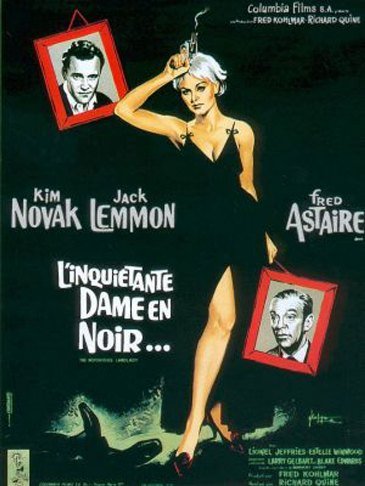
The film is irresistible, thanks in large part to a uniquely literate script by Blake Edwards and Larry Gelbart, based on a short story by British mutmeggy Margery Sharp that ran in Colliers Magazine in 1956. Jack Lemmon and Kim Novak, Quine's muse, teamed up for the third time (following Mark Robson's smart 1954 marital comedy, "Phffft!," and 1958's "Bell, Book and Candle," also directed by Quine), but this time with a romantic payoff. Novak plays an American expatriate living in London and accused of murdering her missing husband; Lemmon plays an American diplomat who rents a flat in Novak's huge Mayfair house, much to the chagrin of his nervous boss, played by Fred Astaire.

Bosley Crowther in The New York Times wrote, "From the moment he pokes the doorbell of Kim Novak's London house and starts sparking brightly on the instant she guardedly answers it, Lemmon is full of delightful little gurgles, witty spayings, appreciate looks and all the amusing indications of a healthy fellow falling - well, in love ... Credit a clever little story and a comic performance by Lemmon that twinkles like a mischief-maker's eyes for the unexpected good humor that generally crackles and pops in Columbia's 'The Notorious Landlady,' which came to the Criterion and the Beekman yesterday."

And in The New Yorker, Edith Oliver wrote, "I don't see how anyone could help but have a good time watching Jack Lemmon, Fred Astaire and a British actor named Lionale Jeffries, all of them expert comedians in a comedy of murder called 'The Notorious Landlady.'"

The topping is a wonderful climatic chase scene along the rocky cliffs of Penzance, which ace music supervisor George Duning set to - what else? - Gilbert and Sullivan.

Aside from Jeffries, the film co-stars Estelle Winwood and Phillipa Bevans, Mrs. Pearce from the original Broadway production of "My Fair Lady."

Bottom Line: Release it on DVD already!

(Artwork: French ad for Columbia's "The Notorious Landlady"/"L'Inquiétante dame en noir")

The Oscars, creative bankruptcy married to misguided snobbery

OK, enough time has passed so I can now comment in a relatively relaxed way. Here goes...

To paraphrase Will Rogers' quote on the weather, everybody complains about The Oscars, but nobody does anything about them. But is this annual giveaway and the vulgar show celebrating it really worth the energy that some critics and film fans invest in them every year?

No, much more offensive than the Academy’s overall lack of taste is its hilariously misguided snobbery – which really isn’t that funny. Case in point: The yearly Irving J. Thalberg Memorial, Jean Hersholt Humanitarian, Gordon E. Sawyer and Honorary awards. These awards seem to bring out the self-consciousness of the Academy’s board of directors who invariably underrate, ignore and, by extention, insult some of film’s most popular professionals. Overlooked in their lifetimes were the invaluable Robert Mitchum, Ida Lupino and Glenn Ford. Still waiting for recognition are Richard Widmark, Doris Day and Jerry Lewis, all of them more than deserving and long overdue. The Academy’s refusal to honor or at least acknowledge them smacks of a dsiturbing lack of gratitude. And that's exactly what this blog is all about.

And what’s with the annual “In Memorium” errata? How difficult is it for someone to keep a list of those film personalities who died during the calendar movie year being honored? Well, apparently, it’s a tough job because how else do you explain the fact that, every year, familiar faces are overlooked? This year, Dennis Weaver, who died on February 24, 2006, and Adrienne Shelly, who was tragically murdered on November 1, 2006, didn’t make the obit reel, while James Doohan, who died on July 20, 2005, not in 2006, inexplicably did make it. The criminally underrated Sheree North didn't make it last year. What's odd about the omission of Shelly is that the last film she directed, "Waitress," generated a lot of buzz at Sundance just as Oscar fever was raging. Anyway, this sloppiness is just another example of the Academy’s overall lack of respects for “its own.”

As for the awards themselves, how can one quibble each year with a voting system that embraces thousands of Academy members, most of whom presumably saw the films and performances for which they’re voting? The winners, as we all know, are tested by time. My hunch is that Jennifer Hudson’s absurd “Dreamgirls” victory over “Babel’s” Adriana Barraza will seem as bizarre 30 years from now as Goldie Hawn’s 1969 triumph over Susannah York does today. (How bizarre? Hawn won for “Cactus Flower”; York lost for “They Shoot Horses, Don’t They?”

And the show itself ? Why waste the energy complaining? Clearly the powers behind it – which is most of Hollywood – think along the lines of “why-fix-what-isn’t-broken?” They are oblivious to the fact that as the Oscarcast grows into a bigger White Elephant each year, it is transcended by the appealing simplicity of the Golden Globes. The Academy of Motion Picture Arts and Sciences must think its progress to trade in those deadly, stultifying production numbers for an endless series of montages that are at once pretentious, self-congratulatory and numbing – the worst one on this past show being Michael Mann’s seemingly pointless hodge-podge.

End of Diatribe.

Oh, one more thing... Why did Oprah exlude Alan Arkin from her post-Oscar TV extravaganza. Mirren, Whitaker, Hudson and Ellen Degenerese were all there, but no Arkin. Was he being pusnished for winning or couldn't me make it? Whatever, an explanation was necessary - but wasn't forthcoming.

(Artwork: from top: publicity shots of Richard Widmark, Adrienne Shelly and Adriana Barraza )

* * *

Anyone interested in perusing some 2060 of my film reviews, dating back to 1994, can do so by simply going to RottenTomatoes.Com

Wednesday, March 14, 2007

shut up and act!

Belatedly, I come to a topic that has been distracting at me for a couple weeks now.

Everybody has one - an opinion, that is. Opinions are as ubiquitous as, well, you know what. Especially opinions about movies. Anyone who has ever worked for a newspaper and has had access to wire services can attest to the fact that opinions about films and filmmakers come cheap.

As someone who freely pontificated opinions for a living for longer than I care to remember, I've learned to respect those of others. But some are just too annoying and have to be addressed - and must.

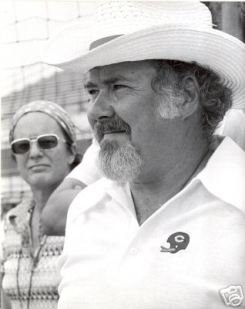
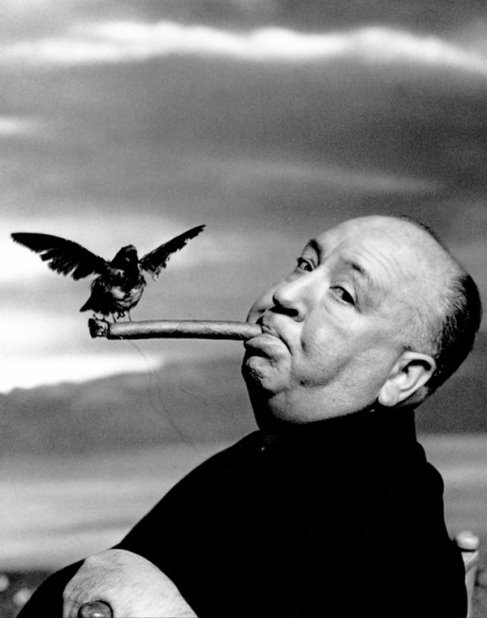
This is in preamble to confronting Lily Tomlin's gratutious remarks about Alfred Hitchcock during a tribute to Robert Altman - the latest of many in recent months - at the Independent Spirt Awards ceremony, held on February 24th. (You did know that Robert Altman was remarkable, right?) Anyway, Tomlin took the stage with Robert Downey, Jr. to praise Altman's famed indulgence of actors, needlessly and unfavorably contrasting Hitchcock with him. Hitch, of course, was infamously more demanding of actors.

Yes, she even hauled out that old Hitchcock analogy that actors are - gasp! - cattle. Heaven forbid.

William H.Macy pretty much recited the same spiel - needless digs at Hitch, a man he never met - when he was doing PR for Gus Van Sant's unnecessary remake of "Psycho" several years ago. (Hey, I have a message myself: I've seen Gus Van Sant movies and, believe me, he's no Hitchcock.)

Look. I liked Altman. I especially liked him during my formative years as a critic in the 1970s, but I grew up and, hopefully, grew wiser. "Nashville," which was my reason for living in 1975, slowly became less illustrious over the years and, yes - dare I say it? - even boring. Altman was of his time, and many of his titles are starting seem like weird artifacts of a brief, fleeting period in Hollywood that, for better or worse, was creatively fertile. I should note here that, as a working critic, I did not believe in or practice blind loyalty. There's no place for it in criticism.

Hitchcock isn't here to defend himself (not that he necessarily would), so I will. His work, unlike Altman's, has proven to transcend time and place. It defies age, even those titles hastily dismissed in their time. The delectable "Marnie" has improved with age; Altman's "Images" hasn't. I'd also wager that, arguably - arguably - there are better, richer performances in Hitchcock's films than in any of Altman's. He was a great, if limited, filmmaker. Hitchcock, on the other hand, was simply great, whether he liked actors or not. I'm sure he disliked critics, too.

So what?

My problem with Tomlin's remarks is based on the fact that I wholly disapprove of denigrating one filmmaker in order to celebrate another, and I hope that I didn't do that here today. Oh, and for what it's worth, I think Tomlin has been quite remarkable on screen.

And not just in Robert Altman movies.

(Artwork: Master filmmakers top: Robert Altman and bottom: Alfred Hitchcock)

* * *

Anyone interested in perusing some 2060 of my film reviews, dating back to 1994, can do so by simply going to RottenTomatoes.Com

façade: Heather Graham


Now is the time to praise Heather Graham.

The reason for the praise is because, well, Heather Graham simply isn't praised enough. She's been on the fringes of genuine stardom for about 20 years now, flourishing mostly in the indie market. Like her art-house cohort, Parker Posey, Graham rightfully should have made a smooth transition into major mainstream stardom years ago. She has the right looks, she has the talent, and that slightly loopy personality that she's carefully honed is always a pleasure to behold.

It could be that Graham - who made her movie debut at age 14 in an uncredited bit in Gilliam Armstrong's "Mrs. Soffel" (1984) and hit her stride a few years later in such films as "Drugstore Cowboy," "Shout" and "Diggstown" - is simply happy remaining on the fringes in the indie world. Either that or Hollywood hasn't been smart enough to snap her up. In the days of the studio system, moguls such as Jack Warner and Harry Cohn would have carefully groomed her for big things. The last actress to receive such hands-on treatment was Goldie Hawn, who was taken under wing by Mike Frankovich.

But I guess even I have taken Graham for granted. It wasn't until I saw her in Sue Kramer's "Gray Matters," playing a seemingly uncomplicated young woman who suddenly realizes she might be a latent homosexual, that I realized just how great she can be, effortlessly so. She gives a major comedy performance in a charming little film that will be forgotten way too soon. Sad.

(Artwork: Movie queen publicity shot of Heather Graham)

* * *

Anyone interested in perusing some 2060 of my film reviews, dating back to 1994, can do so by simply going to RottenTomatoes.Com

Three Times the Fun with Doris Day

Doris Day - one of Hollywood's "misunderstood commodities," as Molly Haskell once put it - has finally become a person of interest in terms of DVD releases. Warners has released two richly deserved boxed sets of her work there and at MGM (one set actually due in April), Columbia made one of its rare decision to do the right thing and commit Richard Quine's super "It Happened to Jane" to DVD and Universal has honored her with home-entertainment editions of the fluff comedies she made there with Rock Hudson, James Garner and producer Ross Hunter.

But where, oh, where is "Midnight Lace," the compulsively watchable mystery-thriller that she made for the estimable David Miller and Universal in 1960?
Now - finally - Fox has saw fit to release three comedies she made there in the mid-to-late 60s - Michael Gordon's "Move Over, Darling" (1963), Ralph Levy's "Do Not Disturb" (1965) and Frank Tashlin's "Caprice" (1967), with Garner, Rod Taylor and Richard Harris as her hunky co-stars, respectively. (Day also worked with Tashlin and Taylor on 1966's antic "The Glass-Bottom Boat" for MGM.)

Now, I'm realistic enough to realize that Day was winding down when she made these three Fox comedies. But one has only to look at the state of the rom-com today to realize that Molly Haskell was right. Just thinking about Doris Day makes me feel better. No contemporary star brings me such unadulterated joy. One complaint: Why didn't Fox box these three titles? Curious.

Now, come on, Universal, bring on "Midnight Lace."

(Artwork: Dust jacket cover for the DVD of Fox's "Move Over, Darling")

* * *

Anyone interested in perusing some 2060 of my film reviews, dating back to 1994, can do so by simply going to RottenTomatoes.Com